



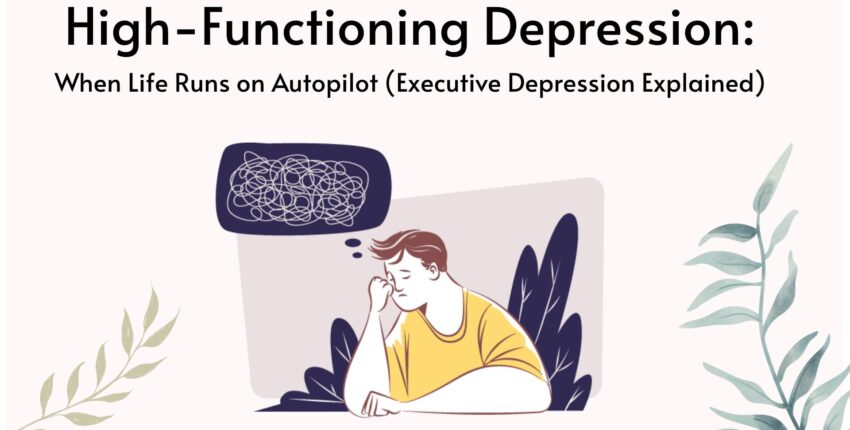
High-functioning depression is often misunderstood, overlooked, and underestimated. Unlike the classical image of depression—where a person appears withdrawn, visibly sad, or unable to function—high-functioning depression looks very different.
People dealing with executive depression usually continue to meet expectations, maintain routines, and appear emotionally stable. Yet deep within, they experience exhaustion, emptiness, and emotional disconnection.
This is why therapy and counselling services become essential for people living with high-functioning depression and anxiety and depression symptoms that stay hidden.
What High-Functioning Depression Really Feels Like
1. Functioning on Autopilot
The person completes every task—meetings, chores, responsibilities—but there is no emotional presence.
This emotional disconnect is one of the strongest indicators of high-functioning depression and executive depression, often requiring therapy or counselling services.
2. Quiet Loss of Motivation
They keep pushing through life, but the inner spark fades.
They may not feel excited, inspired, or hopeful, which strengthens the cycle of anxiety and depression.
3. Emotions Are Masked, Not Missing
People appear cheerful and stable, but inside they feel:
- heaviness
- numbness
- anxiety
- emotional fatigue
This is why professionals often recommend counselling services and therapy to identify emotional blocks.
4. Perfect Outside, Drained Inside
Perfectionism becomes a way to hide internal struggles.
Achievement becomes the mask.
This pattern is very common in individuals with high-functioning depression and executive depression.
5. Chronic Exhaustion
No amount of sleep or rest helps.
The exhaustion is emotional—not physical—signifying underlying anxiety and depression.
6. Joy Feels Distant
They participate in life, but do not fully feel connected.
Hobbies and pleasures feel like tasks, which is a clear sign that therapy or counselling services may be needed.
Why High-Functioning Depression Often Goes Unnoticed
✔ They Don’t Fit the Stereotype
They don’t look depressed.
They function well, socialize, and perform.
This makes high-functioning depression extremely hard to detect.
✔ They Minimize Their Own Struggles
People often think:
- “I should be grateful.”
- “My life is fine.”
- “Others have it worse.”
This makes them avoid therapy or counselling services even when they need help.
✔ Society Rewards Productivity
As long as tasks are completed, no one asks how the person truly feels.
This reinforces anxiety and depression over time.
You Don’t Need to Hit Rock Bottom to Seek Help
High-functioning depression is real. Executive depression is real. Anxiety and depression are real—even when hidden.
You do not need a breakdown before seeking therapy or counselling services.
Early help can prevent:
- burnout
- emotional collapse
- relationship strain
- identity confusion
Therapy supports self-awareness, emotional healing, and rebuilding a sense of connection with life.
Final Thought
High-functioning depression is not:
- a weakness
- laziness
- lack of effort
- lack of gratitude
It is an emotional struggle hidden behind strength, responsibility, and achievement.
If life feels numb, heavy, or disconnected—therapy and counselling services can help you regain clarity, peace, and emotional balance